Perfume application should make a fragrance easier to enjoy, not turn it into a complicated ritual. The right approach depends on the formula, atomizer, clothing and setting. Start lightly, protect delicate materials and follow any directions or warnings printed on the product.
Start with the product directions
Before spraying, check the bottle, carton and manufacturer page for directions or warnings. Fragrance products are cosmetics, and the U.S. Food and Drug Administration advises consumers to read labels, follow directions and stop using a cosmetic if it causes an unexpected reaction.
Do not spray near the eyes, mouth or irritated skin. If a product arrives leaking, damaged or materially different from the listing, keep the packaging and contact support instead of trying to repair or transfer it.
Skin application creates a personal dry-down
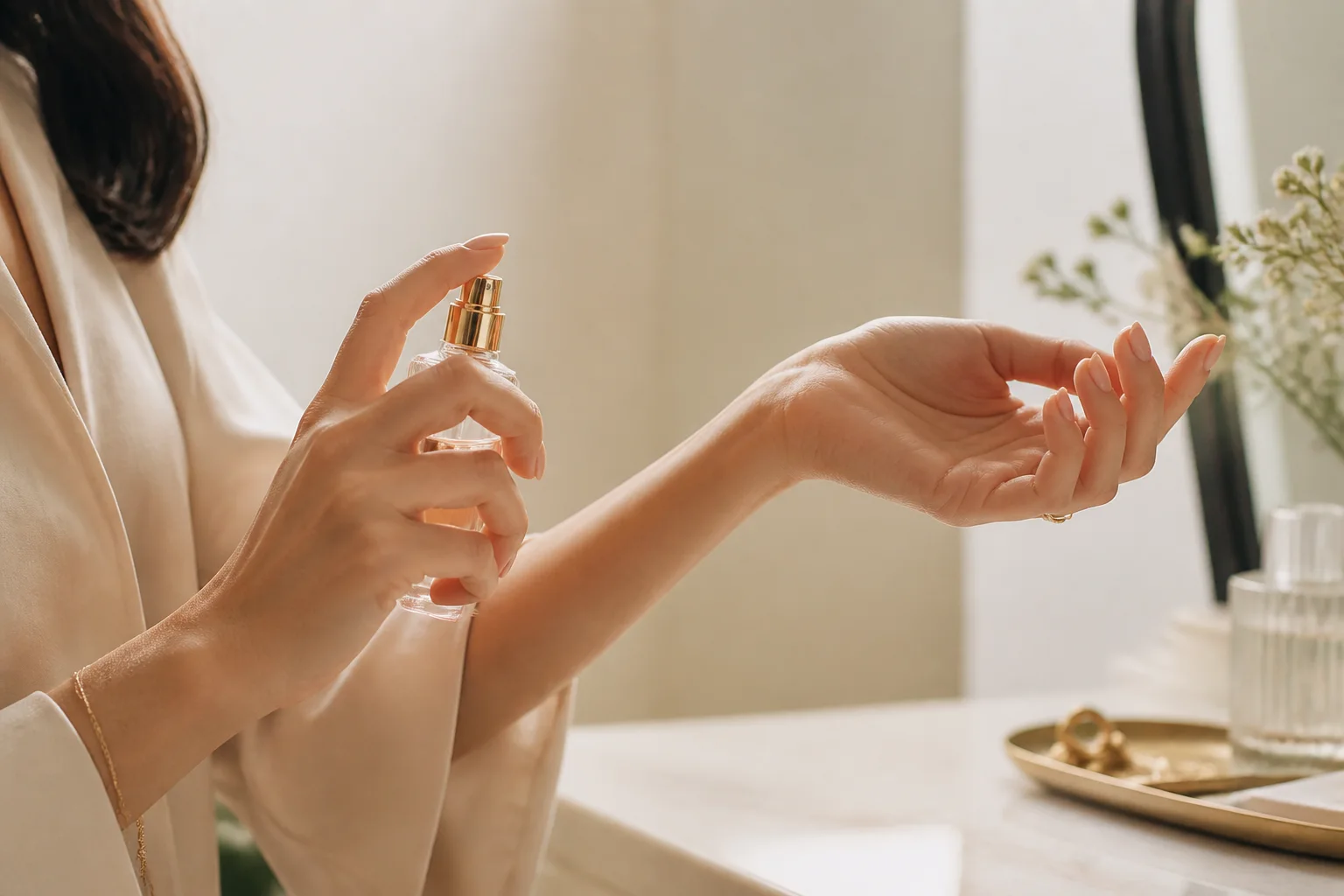
When the product directions permit skin application, wrists and the sides of the neck are common choices. CHANEL describes these as pulse points and notes that fragrance can react with skin to create a more personal effect.
Apply to clean, dry skin and give the spray space to settle. If you are comparing a new fragrance, use one area and wait through the opening, heart and dry-down before adding other scented products. This makes the result easier to evaluate.
- Use clean, dry skin
- Choose one or two application areas
- Let the spray settle before judging
- Stop if irritation or an unexpected reaction occurs
Clothing can preserve the original impression—but test first
Applying fragrance to clothing can reduce the effect of individual skin chemistry. CHANEL recommends the inside of a garment or its lining when using this method, while warning that fragrance can stain some delicate fabrics.
Test an inconspicuous area and avoid silk, pale fabric, leather, jewelry or any material whose care instructions make alcohol-based products unsuitable. Spray from a reasonable distance so one spot is not saturated, and never use fragrance to cover an odor on clothing that needs cleaning.
There is no universal number of sprays
Atomizers release different amounts, and fragrances differ in character and intensity. Room size, weather, clothing and distance from other people also change how noticeable a scent feels.
Begin with a light application when wearing a product for the first time. Wait several minutes, then decide whether another spray is appropriate. A fragrance that feels quiet to the wearer may already be noticeable to someone nearby, especially in a car, office, classroom or restaurant.
- New fragrance: start lightly
- Small shared space: use restraint
- Outdoor setting: reassess rather than overspray
- Strong atomizer: fewer sprays may be enough
Do not chase longevity with friction or saturation
You do not need to rub the fragrance aggressively or soak one area. If you want to understand the intended opening, let the spray dry naturally and observe how it changes.
More product does not guarantee a better dry-down. Heavy application can overwhelm nearby people and make it harder for your own nose to notice the fragrance accurately. If longevity is the goal, first confirm that you chose the preferred concentration and stored the bottle correctly.
- Let the spray dry
- Avoid saturating skin or fabric
- Judge after the opening settles
- Reapply only when appropriate for the setting
Reapply with the day and setting in mind
Before reapplying, step into fresh air or ask someone you trust whether the fragrance is still noticeable. Familiarity can make a scent seem weaker to the wearer even when it remains present.
For travel, use a clean, compatible atomizer and carry only what you expect to use. Protect it from heat and leakage, and check current transportation rules before packing liquids. Do not leave the full bottle in a hot car.
Storage supports the fragrance you apply
Application and storage are connected. Heat, air and direct light can alter a fragrance over time. Keep the bottle tightly closed, upright and away from windows, heating vents and repeated temperature swings.
The original carton or a closed cabinet can provide light protection. If the scent, clarity, color or your skin response changes unexpectedly, stop using the product and review the manufacturer’s guidance.
- Close the bottle after use
- Store it upright in a cool, dark place
- Keep it away from direct sun and hot cars
- Retain the carton and product information